
If you told a recruiter in 2022 that your top priority for 2026 would be hiring a “Synthetic Data Specialist,” they’d probably have asked if you were writing a sci-fi novel. Yet here we are—living in a world defined by Jobs That Didn’t Exist 3 Years Ago, where entirely new roles are emerging faster than traditional job descriptions can keep up.
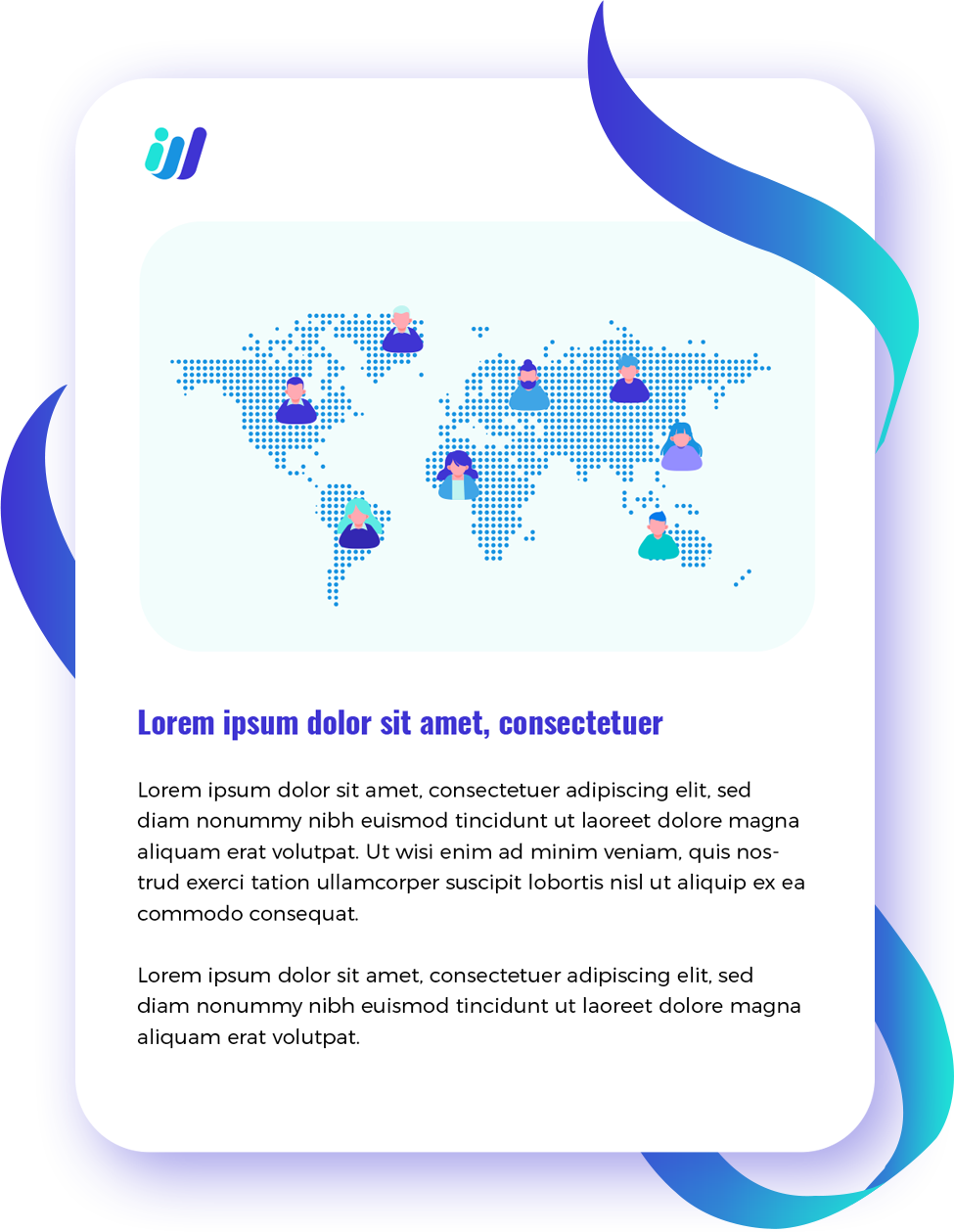
The global labor market is currently navigating a period of unprecedented transformation. We’ve moved past the “Great Resignation” and straight into the “Great Re-skilling.” Roles that were purely theoretical just three years ago are now the backbone of modern enterprise. This evolution is driven by the “Third Wave” of outsourcing—a strategic shift where we stop looking for the cheapest labor and start hunting for the most specialized global talent.
Here are the five jobs that didn’t exist three years ago, and why is your best bet to outsource them.
1. The Prompt Engineer: The “AI Whisperer”
Just a few years back, talking to a computer was something you did out of frustration. Today, Prompt Engineering—or Instructional Architecture—is a high-stakes discipline. These professionals are the bridge between human intent and machine execution.
They don’t just “chat” with AI; they design complex “multimodal prompts” that incorporate audio, video, and text to ensure Large Language Models (LLMs) don’t just hallucinate but deliver.
Why Outsource?
In tech hubs like San Francisco, a senior prompt engineer can command upwards of $245,000. By outsourcing “delivery pods” in regions like Eastern Europe or Latin America, you get the same level of neural network expertise for a fraction of the cost—often between $35 and $90 per hour.
2. The AI Ethics Auditor: The Moral Compass
As AI moved from experimental pilots into core production, we hit a wall: bias. The AI Ethics Auditor is a hybrid of a technologist and a moral philosopher. Their job is to ensure your algorithms play fair and don’t land you in a legal nightmare under the EU AI Act or the Texas Responsible AI Governance Act (TRAIGA).
The Risk of Keeping it In-House
Internal teams often have “organizational blind spots.” They’re under pressure to ship fast. An outsourced auditor provides:
- Independent Validation: Regulators trust third-party audits more than internal “we checked ourselves” reports.
- Benchmark Access: They see how dozens of other models fail, giving them a perspective your internal team simply won’t have.
3. MLOpsSpecialist: The Engine Room
If AI is the car, MLOps (Machine Learning Operations) is the mechanic and the fuel line. In the early days of the AI boom, companies focused on training models. In 2026, the challenge is scaling them.
MLOps specialists ensure models operate reliably in live environments, handling everything from “data drift” (where the AI gets dumber over time) to GPU allocation.
Why Outsource?
These professionals sit at the intersection of data science and systems engineering, making them some of the hardest people to find.
- Ready-built Frameworks: Outsourced agencies usually have “accelerators” that can get your AI pipeline running 25% faster than building from scratch.
- Ready-built Frameworks: Outsourced agencies usually have “accelerators” that can get your AI pipeline running 25% faster than building from scratch.
4. Synthetic Data Specialist: Manufacturing Insight
We’ve officially run out of high-quality “real” data to train AI. Enter the Synthetic Data Specialist. They use Generative Adversarial Networks (GANs) to create “fake” data that is statistically identical to real data but contains zero personally identifiable information (PII).
The 80% Rule: By 2026, unstructured data (video, audio, text) makes up the vast majority of enterprise info. Specialists who can “manufacture” this data allow companies in healthcare and finance to innovate without violating privacy laws like GDPR.
The Financials
A US specialist can easily cost $150,000+. Engaging a “data factory” in India or Southeast Asia allows you to scale your training sets at $30 to $50 per hour, keeping your domestic team focused on the final product rather than the raw materials.
5. Climate Impact Analyst: The Green Strategist
The “Green Economy” is no longer a PR move; it’s a business imperative. Climate Impact Analysts translate satellite observations and climate models into actionable business strategies. They help you navigate the shift toward net-zero and ensure your supply chain isn’t a ticking regulatory time bomb.
The Strategic Edge
Outsourcing this role gives you access to specialized GIS (Geographic Information Systems) expertise that isn’t your core business. It’s about “Green Outsourcing”—partnering with firms that have already optimized their carbon footprints to help improve your own ESG profile.
The Economics of 2026: Why Global Wins
When you look at the Total Cost of Ownership (TCO) for a senior hire in 2026, the numbers for in-house US hiring are staggering compared to high-tier global talent.
| Cost Component | US In-House (Senior AI Dev) | Outsourced Partner (Global) |
| Base Salary / Fee | $180,000 | $115,200 ($60/hr) |
| Recruiter / Mgmt Fee | $45,000 | $11,520 |
| Benefits & Taxes | $54,000 | Included |
| Infrastructure/Tools | $18,000 | Included |
| Total First Year Cost | $297,000 | $126,720 |
By leveraging global talent pools, organizations are seeing 40% to 70% cost reductions while increasing the quality of their specialized output.
Final Thoughts: Survival of the Flat
In 2026, the “Third Wave” isn’t about saving pennies; it’s about survival. The pace of tech has moved faster than traditional HR can keep up with. If you limit yourself to a talent pool within “commuting distance,” you’re essentially handicapping your ability to scale.
The organizations leading the pack today are those that treat global talent as partners, not commodities. They understand that while the tools are new, the goal remains the same: No excuses, just results.
Ready to dive deeper into how Third Wave Outsourcing can future proof your business strategy? Download our comprehensive ebook to explore the nuances of finding the best talent, building powerful partnerships, and leveraging this global shift for sustained success. The future of outsourcing is here. Are you prepared to embrace it?