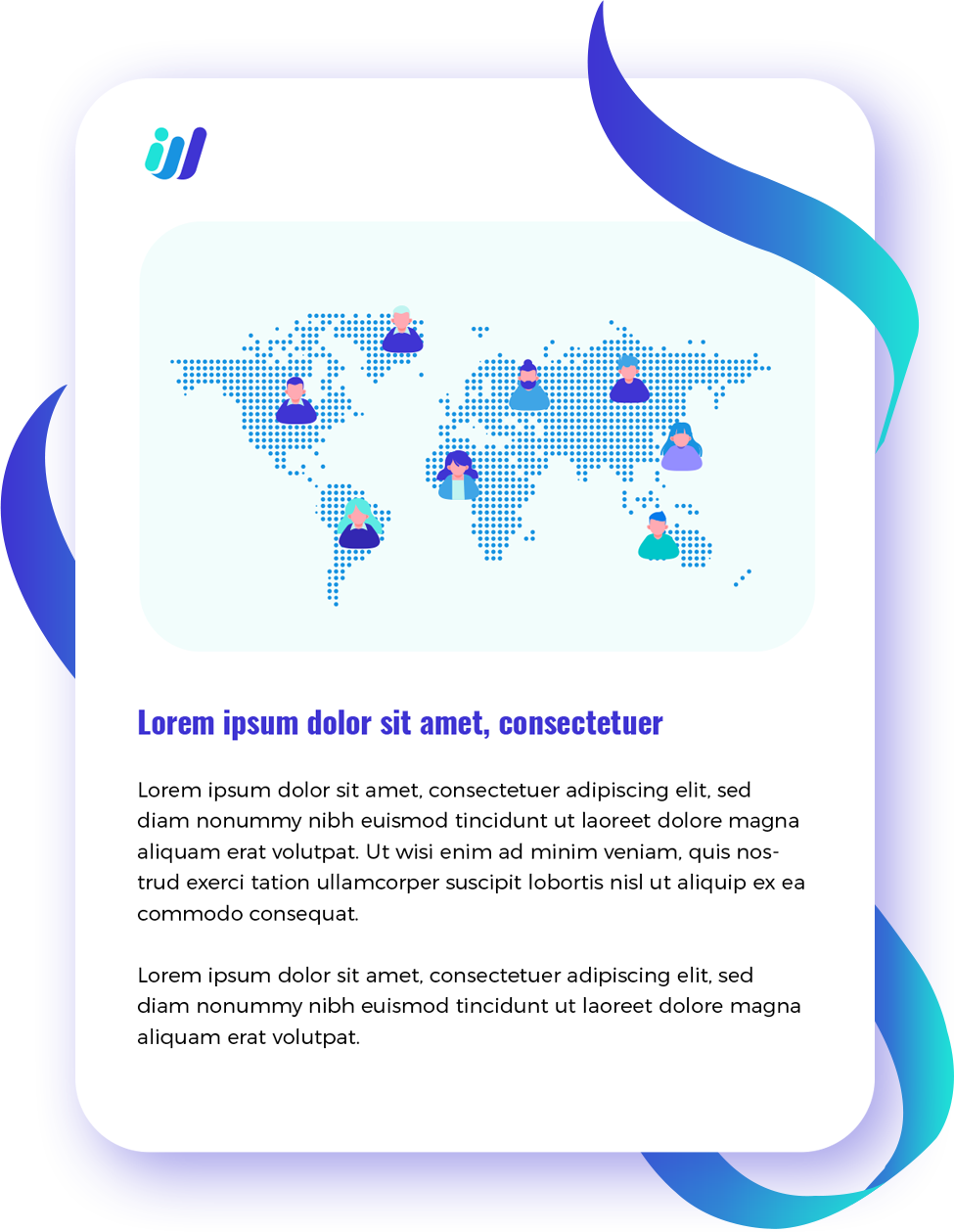

If the last decade taught us anything, it’s that great teams aren’t built inside four walls anymore. They’re built across continents, cultures, and time zones — stitched together by trust, clarity, and the willingness to rethink how work actually gets done.
A lot of people still talk about outsourcing as if it’s stuck in the early 2000s — cubicles of anonymous workers doing basic support tasks. But that world is long gone. What we’re living in now is something entirely different: a global talent revolution where the goal isn’t to cut costs, but to raise the bar.
Today, the smartest companies don’t ask, “Where can we hire cheap labor?”
They ask, “Where in the world is the best person for this job?”
This shift — often called the Third Wave of Outsourcing — is powering some of the most innovative teams on the planet. And if you’re managing people today, this is your playbook for building a team that thrives in it.
Part I: The New Logic of Global Teams
From Cost-Cutting to Talent-Finding
There was a time when outsourcing was mainly about labor arbitrage. That time is over.
In today’s market, companies are competing on skill, not headcount — and skills are scattered everywhere.
When you stop limiting hiring to whoever lives near your office, everything changes. You suddenly have access to brilliant engineers in Vietnam, UX designers in Argentina, and data analysts in Romania. You also get something equally valuable: diverse perspectives. When a team brings different cultures, backgrounds, and lived experiences to the table, you get better ideas because people think differently. That kind of “cognitive friction” is rocket fuel for innovation.
The New Economics
Cost savings still matter — any CFO will tell you that. But now the equation is smarter:
- You reinvest savings into higher-tier talent.
- You can scale up or down faster.
- You reduce risk because your team isn’t concentrated in one location.
And thanks to cloud infrastructure, developers in Manila or São Paulo now log into the same secure environment as developers in San Francisco — without the old friction that made global teams feel “separate.”
Part II: A Quick Look Back at How We Got Here
The First Wave: The Cheap Labor Era
The 80s–90s version of outsourcing was simple: move repetitive, well-defined tasks abroad to reduce costs. It worked — but the quality was often inconsistent, the relationships were transactional, and communication was slow and clunky.
The Second Wave: The Efficiency Era
When the Y2K scare and the early internet boom hit, the world needed more developers fast. Companies began using global time zones to keep work moving 24/7. This was the “Follow the Sun” era. It boosted productivity, but teams still felt like separate islands.
The Third Wave: The Talent Era
Around 2018 — and especially after COVID — everything changed. Remote work proved itself. Global collaboration became normal. Companies stopped thinking of “offshore” workers as vendors and started treating them as part of the core team.
This is where we are today:
Outsourcing is no longer a side tactic — it’s a strategy for building the strongest team possible.
Part III: The Global Talent Atlas — Where to Hire and Why
Every region has strengths. Smart managers match the role to the region’s strengths instead of hiring blindly.
LATAM: The Real-Time Collaborators
Why companies love LATAM:
- Time zones overlap with North America
- Collaboration feels natural and culturally aligned
- Strong design, product, and front-end capabilities
Perfect for teams that rely on daily standups and rapid iteration.
Eastern Europe: The Engineering Powerhouse
This region shines in:
- Deep technical problem-solving
- AI/ML
- Systems architecture
- Blockchain
- Complex backend development
The communication style is direct and analytical — which engineering teams usually appreciate.
Asia: The Giant with Layers
India delivers scale.
Vietnam brings an incredible cost-quality sweet spot for startups.
The Philippines remains unbeatable for English communication and customer-facing roles — now expanding into creative and technical fields.
Part IV: Attracting Global Talent (Recruitment Is Now Marketing)
Good candidates don’t respond to stiff corporate job ads. They want honesty, personality, and clarity.
- OptimizeYour Brand for Talent
Candidates Google you — aggressively.
Publishing your team’s values, working style, “how we give feedback,” or your own management philosophy instantly filters in the right people.
- Write Job Descriptions Like a Human
Instead of generic lines like “remote work experience preferred,” try:
“We work mostly async, value autonomy, and only require a 4-hour overlap with EST.”
That line alone will attract people who thrive in remote environments.
- Interview for Remote Readiness
- Give async tasks.
- Evaluate writing clarity.
- Look for “culture add,” not “culture fit.”
Part V: Onboarding — The Make-or-Break Phase
Global hiring fails when onboarding is sloppy.
Before Day 1
- Stay in touch after they sign.
- Give them access early.
- Make sure their tools arrive on time (nothing kills enthusiasm like waiting 5 days for a laptop).
The 30-60-90 Plan
Days 1–30: Meet people, learn tools, get small wins.
Days 31–60: Gain confidence and autonomy.
Days 61–90: Own outcomes and define a long-term track.
A simple structure like this can cut turnover dramatically.
Part VI: Managing a Distributed Team
Remote management forces you to drop old habits — especially micromanagement.
Async First
Meetings are expensive. Messages are not.
If it can be written, write it.
If it needs nuance, record a short Loom video.
Trust as a Management Strategy
Measure outputs, not time.
No spyware. No “green dot” policing.
Trust is the currency of remote work — without it, nothing scales.
Meetings That Don’t Waste Time
- Use written memos.
- Rotate meeting times across regions.
- Keep meetings small.
People do their best work when you respect their time.
Part VII: Your Remote Tech Stack Is Your Office
A simple, effective digital setup is all you need:
- Slack or Teams for communication
- Asana, Linear, or Jira for project tracking
- Notion or Confluence for documentation
- Miro or FigJam for brainstorming
- Loom for async clarity
- Deel or Remote for global payroll
- AI tools for summarizing and accelerating workflows
Document everything. If it isn’t written down, it doesn’t exist.
Part VIII: Culture, Retention & Keeping People Healthy
Remote culture doesn’t form by accident — you have to build it.
Intentional Connection
- Randomized coffee chats
- Optional team activities
- Conversations that aren’t always about work
Prevent Burnout
Remote workers often feel pressure to seem “present.”
Set boundaries as a leader.
Use scheduled sends.
Respect weekends.
Inclusion Matters
Your team spans cultures — be mindful of holidays, idioms, and communication styles. Clear, simple language is a global language.
Conclusion: The Future Is Distributed — And It’s Already Here
Building a high-performance remote team isn’t about assembling bodies across time zones. It’s about designing a culture where people can do the best work of their careers — wherever they are.
Companies that understand this aren’t just tapping global talent…
They’re building global advantage.
If you get the hiring, onboarding, communication, and trust right, global teams don’t just work — they outperform.
The playbook is here. The next move is yours.
Ready to dive deeper into how Third Wave Outsourcing can future proof your business strategy? Download our comprehensive ebook to explore the nuances of finding the best talent, building powerful partnerships, and leveraging this global shift for sustained success. The future of outsourcing is here. Are you prepared to embrace it?